A Complete Guide to Air Fryer Safety
Air fryers are convenient, fast, and generally safe when used correctly. However, they operate using high temperatures, powerful fans, and electrical components, all of which require basic safety awareness. Misuse can lead to fire hazards, damaged appliances, or food safety issues.
This guide covers the essential safety practices you should follow to use an air fryer reliably and without risk.
1. Proper Placement and Ventilation
Air fryers generate significant heat and require adequate airflow to function safely.
Key guidelines:
- Place the air fryer on a flat, heat-resistant surface
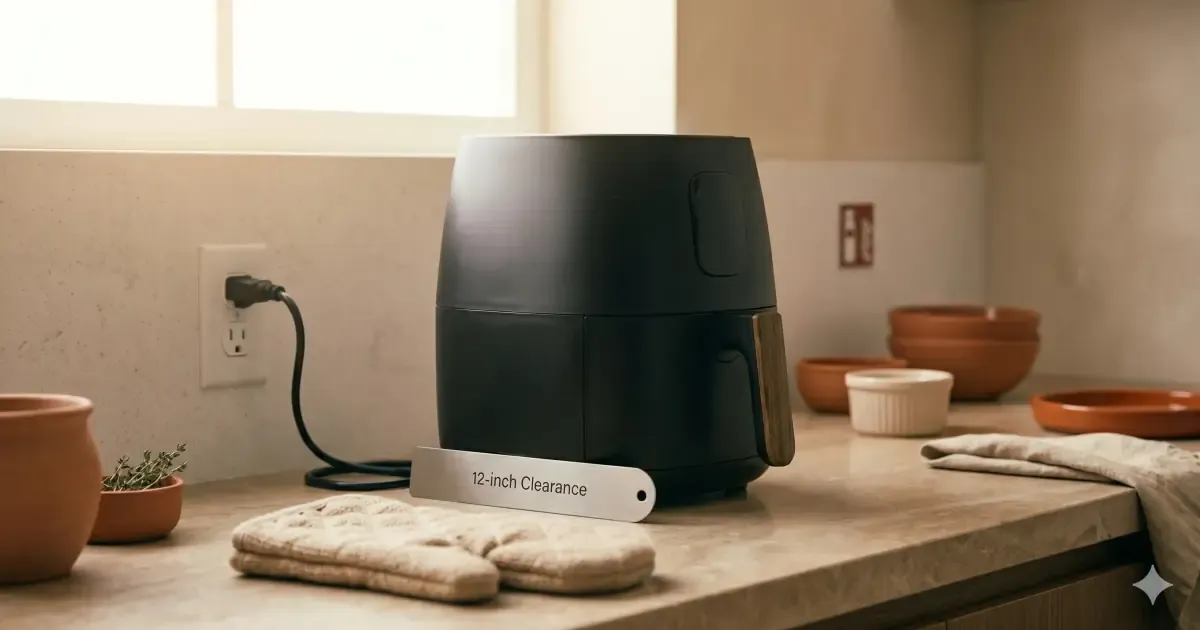
- Keep at least 5-10 cm (2-4 inches) of space around all sides
- Avoid placing it under cabinets or near walls without clearance
- Never operate it inside a closed cabinet or drawer
2. Electrical Safety Basics
Air fryers draw a considerable amount of power, typically between 1200W and 1800W.
Follow these precautions:
- Plug directly into a wall outlet. Avoid extension cords or power strips
- Do not share the outlet with other high-power appliances
- Inspect the cord regularly for damage
- Keep the plug and cord away from water or hot surfaces
3. Avoid Overfilling the Basket
It is tempting to cook large portions at once, but overcrowding affects both safety and performance.
Risks of overfilling:
- Blocked airflow leading to uneven cooking
- Excess oil or food particles dripping and burning
- Increased internal temperature stress
4. Use Only Air Fryer-Safe Materials
Not all cookware or liners are safe inside an air fryer.
Safe options:
- Metal racks and trays designed for air fryers
- Oven-safe glass or ceramic (if it fits properly)
5. Manage Oil and Grease Carefully
Although air fryers use less oil than deep frying, grease still accumulates during cooking.
Safety considerations:
- Do not pour excessive oil into the basket
- Clean grease buildup regularly to prevent smoke
- Be cautious when cooking fatty foods (like bacon)
6. Never Leave It Unattended
Air fryers are generally safe, but like any high-heat appliance, they should not be left running unattended.
Best practice:
- Stay nearby while cooking
- Check periodically for smoke or unusual smells
- Turn off immediately if something seems wrong
7. Handle Hot Components Safely
Air fryer baskets, trays, and internal surfaces become extremely hot during use.
Precautions:
- Always use the handle to remove the basket
- Avoid touching internal parts during or immediately after cooking
- Use heat-resistant gloves if needed
- Place the hot basket on a heat-safe surface
8. Clean the Air Fryer Regularly
Routine cleaning is not just about hygiene. It is critical for safety.
Cleaning tips:
- Unplug and allow the unit to cool before cleaning
- Remove and wash the basket and tray after each use
- Wipe down the interior to remove grease or food particles
- Avoid abrasive cleaners that can damage non-stick coatings
9. Be Cautious with Smoke and Odors
Some foods naturally produce smoke when cooked at high temperatures.
If smoke appears:
- Turn off and unplug the unit
- Allow it to cool before inspecting
- Clean any visible grease or debris
10. Follow Manufacturer Guidelines
Each air fryer model has specific instructions and limitations.
Always:
- Read the user manual before first use
- Follow recommended temperature and time settings
- Use approved accessories
- Respect maximum capacity limits
Food Safety Considerations
Air fryer safety is not only about the appliance. It also includes safe food handling.
• Ensure meats reach proper internal temperatures
• Avoid cross-contamination between raw and cooked foods
• Do not rely solely on appearance for doneness
Using a food thermometer is the most reliable way to confirm food safety.
Authoritative Safety Resources
Internal-temperature targets come from these official health bodies. Warranty terms come from the manuals for the two units we test.
USDA (United States Department of Agriculture)
Safe Minimum Internal Temperature Chart for all foods.
Health Canada
Official Canadian standards for safe internal cooking temperatures.
Cosori Pro II 5.8-Qt User Manual and Warranty Terms
The 2-year limited warranty against defects in material and workmanship cited in the replacement section. The manual does not describe a child lock.
Ninja AF101 Owner's Guide
The 1-year limited warranty against defects in material and workmanship cited in the replacement section. The guide does not describe a child lock.
What to do if your air fryer catches fire
If you see flames inside the basket or smoke that does not clear in 30 seconds, do not open the basket. Opening the basket pulls room air into the cooking chamber and feeds oxygen to the fire. A small flame becomes a flare-up in seconds. Keep it closed.
Step 1: turn off the unit at the dial and unplug it. If the cord routing makes unplugging dangerous (cord behind the unit, plug obscured by smoke), kill the circuit at the breaker instead. Step 2: leave the basket closed for 5 minutes. Most small grease fires in a sealed air fryer chamber starve themselves of oxygen and self-extinguish.
If flames persist or smoke continues thickening after 5 minutes, smother the unit by covering it with a metal lid or fire blanket. Never use water, which spreads burning oil. For grease fires that escape the chamber, use a Class K (kitchen) or Class B-C (cooking-oils-and-electrical) extinguisher. Standard ABC extinguishers work but leave a corrosive residue. Call 911 if the fire reaches the cord, the counter, or any cabinet face.
Air fryer safety with kids in the kitchen
Air fryer exteriors run between 150°F and 180°F during operation, hot enough to cause a second-degree burn on contact with skin in 2 to 5 seconds. The basket itself reaches the dial temperature plus the surface contact heat from food, often peaking above 400°F. Treat the unit like an active stovetop, not a microwave.
Three rules for kitchens with kids under 12: place the air fryer at least 3 feet from any edge a child can reach, route the cord behind the unit (never draped where a curious hand can pull), and use heat-resistant silicone gloves whenever opening or removing the basket. Children under 8 should not operate the unit; ages 8 to 12 can press buttons under direct supervision but should not handle the hot basket.
Age-appropriate involvement: kids 5+ can prep ingredients (washing, dry-rub mixing) while the unit is off and unplugged. Kids 8+ can press the start and stop buttons under supervision. Kids 12+ can handle the basket using gloves and a heat-safe surface. Neither the Cosori Pro II nor the Ninja AF101 manual describes a child lock, so with toddlers in the kitchen the placement and cord rules above do the protecting. If your own model's manual lists a lock, turn it on as well.
When to replace your air fryer
Air fryers don't fail dramatically; they degrade. Four signs mean the unit has reached end of useful life and replacement is safer than continued use: cracked or chipped basket coating exposing the underlying metal, frayed or discolored power cord, fan-noise change (a new rattle, grinding, or pitch shift), and persistent smoke that returns after a thorough deep clean.
Warranties on the units we test run 2 years (Cosori Pro II) and 1 year (Ninja AF101), covering defects in material and workmanship. Mechanical components rarely fail outright in that window; surface coating wear is the usual end-of-life signal at year 3 to 4 of regular use. Replacing a unit at the first sign of coating wear costs roughly $100 and prevents the food-safety risk of cooking food directly on exposed aluminum, which can leach into acidic foods (tomato sauce, citrus marinades) over repeated cooks.
Final Checklist
Frequently Asked Questions
Is it safe to leave an air fryer unattended while it's running?
No. Air fryers use high heat and a powerful fan, so they should not be left unattended during cooking. Stay nearby, check periodically for smoke or unusual smells, and turn it off immediately if something seems wrong.
Can you use an extension cord or power strip with an air fryer?
No. Air fryers draw 1200 to 1800 watts, so they must plug directly into a wall outlet. Extension cords and power strips can overheat under that load, and sharing the outlet with other high-power appliances can trip the circuit or cause an electrical fault.
How much clearance should you leave around an air fryer?
Leave at least 5 to 10 centimeters (2 to 4 inches) on all sides, and do not place the unit under cabinets or in a closed drawer. The exhaust vent, usually at the back, must stay unobstructed at all times so the appliance does not overheat.
Can you put aluminum foil or parchment paper in an air fryer?
Small pieces of aluminum foil are usually safe if they are weighed down by food and do not block the airflow vents. Avoid plastic containers and loose paper towels. If you use parchment paper, choose air fryer-safe perforated sheets and make sure food holds them in place.
What should you do if your air fryer starts smoking?
Turn it off immediately and unplug it. Light smoke is almost always caused by grease buildup or excess oil hitting the heating element. Let the unit cool, clean the basket and heating element, and cook fatty foods (like bacon) with a small amount of water in the drip tray to catch melting fat.
How often should you clean an air fryer?
Clean the basket and tray after every use, and deep-clean the heating element and internal surfaces weekly for regular users. Routine cleaning is a safety measure, not just hygiene. Grease buildup combined with high heat can smoke or, in rare cases, ignite.
Is it safe to cook fatty foods like bacon in an air fryer?
Yes, but with care. Fatty foods release grease that drips onto the heating element and can smoke or splatter. Cook bacon in small batches, add a tablespoon of water to the drip tray to catch fat, and clean the unit immediately after so grease does not accumulate.
The Bottom Line
Air fryers are safe and efficient when used correctly, but they demand the same level of care as any high-temperature kitchen appliance. Proper placement, responsible operation, and regular maintenance significantly reduce risks.
By following these safety principles, you can use your air fryer confidently while protecting your home, your appliance, and your food quality.