Why Your Air Fryer Smokes: 7 Causes and Fast Fixes
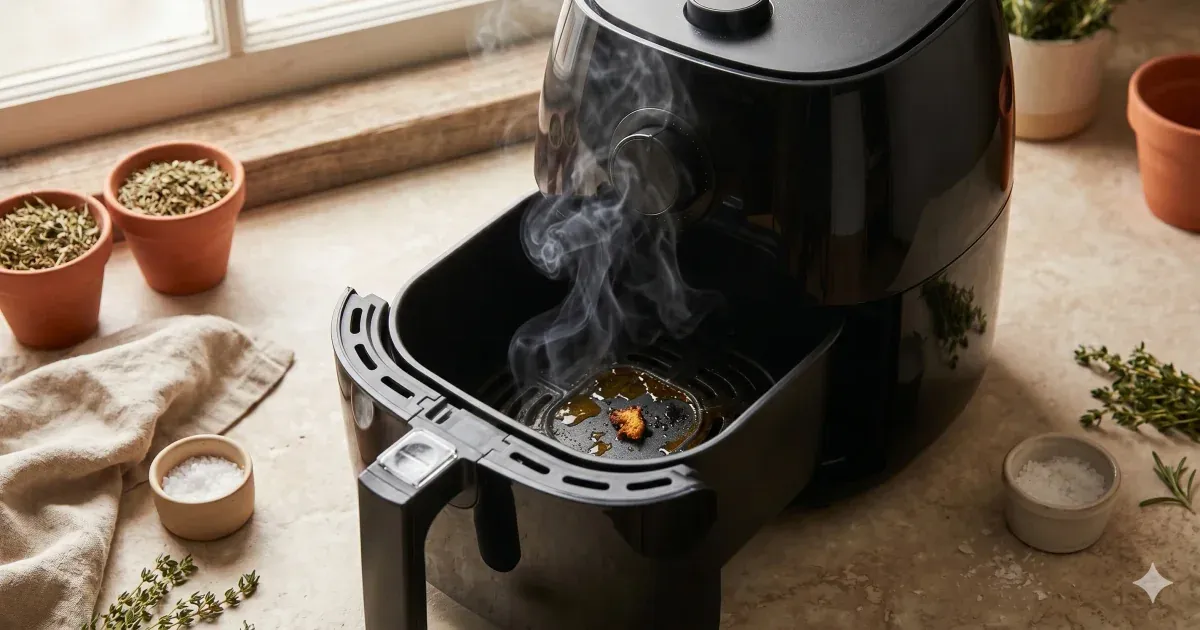
Smoke from an air fryer is almost never a defect. It is grease meeting a 600°F heating element, oil with the wrong smoke point, or food the fan has lifted into the wrong place. The fix is usually mechanical and takes under two minutes.
This guide covers the seven causes we see most often, the exact fix for each, and the small set of cases where the smoke means stop using the unit. Grease and electrical guidance aligns with the USDA FSIS and Health Canada sources cited at the end.
What to Do Right Now
Turn off and unplug the unit. Do not open the basket while it is actively smoking; the inrush of oxygen makes any flare-up worse. Wait two minutes for the fan cooldown cycle to clear residual smoke.
Then open the basket and check three things in this order: grease pooled at the heating element, food touching the element, and parchment or foil that has lifted off the basket floor. Nine times out of ten the cause is one of those three; the remaining causes are covered below.
High-Fat Food Without a Water Buffer
Bacon, sausage, fatty ground beef, and skin-on chicken thighs render large amounts of fat in the first five minutes of cooking. That fat drips through the basket onto the drip tray and, in some models, directly onto the heating element. Fat hitting a 350°F+ element smokes immediately.
The fix is two tablespoons of water in the drip tray before cooking. The water absorbs dripping fat below its smoke point and evaporates harmlessly. In our test cooks on a Cosori Pro II 5.8-qt and a Ninja AF101, a dry tray smokes within four minutes while a tray with water added runs the full nine-minute cycle without visible smoke.
The Fix
- Add 2 tablespoons of water to the drip tray before cooking fatty foods
- Refresh the water if cooking longer than 15 minutes
- Empty and wipe the tray as soon as the cycle ends; don't let cooled grease re-harden
Residual Grease From a Previous Cook
If the unit smokes during something it shouldn't smoke for, like reheating a pizza slice or a tray of vegetables, the cause is almost always grease left over from the last cook. The element runs roughly 100°F hotter than the cook chamber temperature, so even a tablespoon of leftover bacon fat burns the moment the fan starts.
Confirm by pulling the basket and looking at the heating element from below. Black or brown spots, sticky surfaces, or visible droplets all point to residual fat. A damp cloth on a fully cooled element clears most buildup; for stuck-on residue, a soft brush and a drop of dish soap on the unplugged, cool unit handles the rest.
The Fix
- Wash the basket and drip tray after every cook, not just visible greasy ones
- Wipe the heating element weekly when the unit is fully cool and unplugged
- Avoid abrasive scrubbers; they damage the non-stick coating and create new fat-trapping surfaces
Oil Sprays With Low Smoke Points
Extra-virgin olive oil smokes at roughly 375°F. Butter and butter sprays smoke at roughly 350°F. Air fryers commonly run at 380°F to 400°F, which puts these oils above their smoke point the moment cooking begins. The result is a thin acrid smoke and a burned-oil smell that lingers for the next two cooks.
Switch to refined avocado oil (smoke point roughly 520°F), refined peanut oil (450°F), or a high-oleic neutral oil. All three sit comfortably above any temperature your air fryer reaches. Save the extra-virgin olive oil and butter for finishing after the cook.
Deep fryers smoke for a different reason: the oil is the heat source. USDA FSIS fries at 320°F to 375°F with oils that smoke at about 435°F to 450°F (canola, peanut, safflower, soybean). A deep fryer smokes when the vat runs too hot or the oil is worn out, and FSIS says to discard oil that turns cloudy, foams, or smells foul. An air fryer has no vat. Its smoke comes from the thin coat of oil on the food, or from fat and residue reaching the drip tray and element.
The Fix
- Use refined avocado, peanut, or high-oleic neutral oil for cooking sprays
- Apply oil to the food, not the basket; less ends up dripping onto the element
- Skip aerosol sprays with propellants; they leave a residue that smokes on subsequent cooks
Food Touching the Heating Element
Air fryer fans pull food up. A piece of bread, a tortilla, a thin chicken cutlet, or a slice of cheese can lift off the basket and contact the heating element. The food chars in seconds and produces dense, dark smoke. This is the most alarming visual cause but also the easiest to prevent.
Always weigh down lightweight items with something heavier on top: a small metal rack, a stainless trivet, or another piece of food works. For pizza slices and tortillas, two toothpicks pushed through the food into the basket holes prevents lift entirely. The fan on most single-basket models sits directly above the basket, so tall food on entry-level units (the Ninja AF101 included) can reach the element with minimal lift.
The Fix
- Weigh down lightweight items with a metal rack or heavier food
- Stop cooking if you see food curling upward; reposition before resuming
- For tall items, leave 1 inch of clearance to the chamber roof and recheck mid-cycle
Parchment or Foil Lifted by the Fan
Loose parchment paper or aluminum foil is the air fryer fan's natural enemy. The 12-meters-per-second airflow lifts unweighted paper or foil straight up into the heating element, where it scorches and produces smoke or, in worst cases, a small flame. Cosori's manual allows parchment and foil, but warns never to put parchment in without food on top, because circulating air can lift it into the heating coils.
The fix is unconditional: parchment or foil must be weighed down by the food itself. Pre-perforated air-fryer parchment is safer than full sheets because perforations reduce lift, but even perforated parchment needs food on top before the fan starts. If you see paper or foil curling upward, stop the cycle and reposition or remove the liner.
The Fix
- Place food on top of parchment before starting the fan, never the other way around
- Use pre-perforated air-fryer parchment, not solid sheets
- Never preheat with empty parchment in the basket
Sugary Marinades and Glazes Burning
Honey, brown sugar, BBQ sauce, teriyaki, and most commercial marinades contain enough sugar to burn at 350°F+. The burning produces a sharp, sweet smoke distinct from grease smoke and leaves carbonized residue on the basket and food.
The fix is timing. Apply sugary glazes only during the final 3 to 5 minutes of cooking, or finish them after the cook with a quick basting. For dry rubs containing brown sugar or paprika, drop the air fryer temperature by 20°F and add 2 to 3 minutes to the cook time.
The Fix
- Apply sugary marinades only during the final 3 to 5 minutes of cooking
- Drop air fryer temperature by 20°F when using sugary dry rubs
- Wipe the basket immediately after cooking; sugar residue hardens in minutes
A Damaged Cord, Fan, or Heating Element
If smoke comes from the body of the unit rather than the basket, or from the cord or plug, stop using the air fryer immediately. Damaged cords smoke from heat at the insulation, not from cooking. A failing fan motor smells like burning plastic, distinct from grease or food smoke.
Heating elements rarely fail outright but can develop hot spots after 3 to 4 years of regular use. Signs: longer cook times for the same recipes, uneven browning, and persistent smoke after a thorough cleaning. Damaged units are not user-fixable. The Cosori Pro II carries a 2-year warranty and the Ninja AF101 a 1-year warranty against defects; check your purchase date before troubleshooting further.
The Fix
- Stop using the unit if smoke comes from the body, cord, or plug
- Check warranty status before any DIY repair attempt
- Replace the unit if symptoms persist after a thorough deep clean
When the Smoke Means Stop Using It
Most air fryer smoke is fixable in two minutes. A small set of cases is not. If you smell burning electrical insulation, see smoke from the cord or unit body rather than the basket, or hear an unusual fan noise alongside smoke, unplug and stop using the appliance.
Smoke that returns immediately after a thorough deep clean is the second stop signal. If the basket, drip tray, and heating element are all visibly clean and the next cook still smokes, the heating element or fan motor is likely failing. This is a warranty-replacement call, not a DIY repair.
Oil Smoke Point Reference
Air fryers commonly hit 380°F to 400°F. Use oils that sit comfortably above that range. The numbers below are approximate published smoke points for refined varieties.
- Avocado oil (refined): 520°F. First choice for high-heat air frying
- Peanut oil (refined): 450°F. Strong second choice with mild flavor
- Canola oil (refined): 400°F. Borderline for 400°F cooks; works at 380°F
- Olive oil (refined / light): 465°F. Fine for air fryer use
- Olive oil (extra-virgin): 375°F. Too low for most air fryer cycles
- Butter / butter spray: 350°F. Finishing only, not for cooking
- Coconut oil (refined): 450°F. Works but adds a flavor; refined only
Frequently Asked Questions
Why is my air fryer smoking when I cook bacon?
Bacon renders fat that drips onto the heating element and smokes on contact. Add two tablespoons of water to the drip tray before cooking. The water keeps the fat below its smoke point and evaporates harmlessly during the cook.
Is air fryer smoke dangerous?
Light smoke from grease or food is not dangerous in normal quantities, but it indicates a problem worth fixing. Smoke from the unit body, cord, or plug is different and means stop using the appliance immediately.
Why does my air fryer smoke even when it is empty?
Residual grease from a previous cook is the cause 95 percent of the time. Pull the basket, inspect the heating element from below, and wipe any visible residue with a damp cloth on a cool, unplugged unit. The next cook should run smoke-free.
Can I use olive oil in an air fryer?
Refined olive oil is fine; its smoke point is around 465°F. Extra-virgin olive oil smokes at 375°F, which is below most air fryer cooking temperatures. Use refined avocado, peanut, or refined olive oil for cooking and save extra-virgin for finishing.
Why does my air fryer smell like burning plastic?
A plastic smell on the first run is normal. The Cosori Pro II manual puts it down to the manufacturing process and says an empty test run clears it, and to contact customer support if it does not. After that, a plastic smell means a damaged cord, a failing fan motor, or melted plastic from packaging left inside. Stop using the unit and inspect.
How do I clean my air fryer to stop smoking?
Unplug, let it cool, then wash the basket and drip tray with warm soapy water. Wipe the heating element with a damp cloth, working only when fully cool. Avoid abrasive scrubbers, which damage the non-stick coating and create new fat-trapping surfaces.
When should I replace my smoking air fryer?
Replace it when smoke persists after a thorough deep clean, when the cord or unit body smokes, or when cook times have lengthened noticeably for the same recipes you have always used. Heating elements develop hot spots after three to four years of regular use; that is end-of-life.
Sources & references
Smoke-management guidance on this page combines manufacturer-published warnings with primary food-safety and oil-chemistry sources. Cooking observations come from in-kitchen testing on the units below.
USDA FSIS Safe Food Handling and Preparation
General food-handling and grease-management baseline that informs the water-buffer recommendation for high-fat cooks.
Health Canada Safe Internal Cooking Temperatures
Cross-reference for safe-cooking guidance applicable when smoke management interrupts a cook cycle.
Cosori Pro II 5.8-Qt Manual
Warns never to put parchment paper in without food on top, because circulating air can lift it into the heating coils; the basis for the no-loose-liner rule.
Ninja AF101 Owner's Guide
Warns not to overfill the basket, so food cannot touch the heating elements, and to pin down lightweight foods the fan can blow around, used in the food-touching-element section.
USDA FSIS Deep Fat Frying and Food Safety
Frying temperatures, oil smoke points, and used-oil discard signs in the deep fryer comparison.
Cosori Pro II 5.8-Quart (CS358-AF) User Manual
First-use plastic smell and the test run that clears it, in the burning-plastic FAQ.
Bottom Line
Air fryer smoke almost always comes from one of three places: grease on the heating element, food touching the element, or oil with the wrong smoke point. Each fix takes under two minutes.
Two tablespoons of water in the drip tray prevents the most common cause. Refined avocado or peanut oil prevents the second. Weighing down lightweight food and parchment prevents the third. The other four causes are smaller volume problems with the same kind of fix.