Top 5 Things You Should Never Put in an Air Fryer
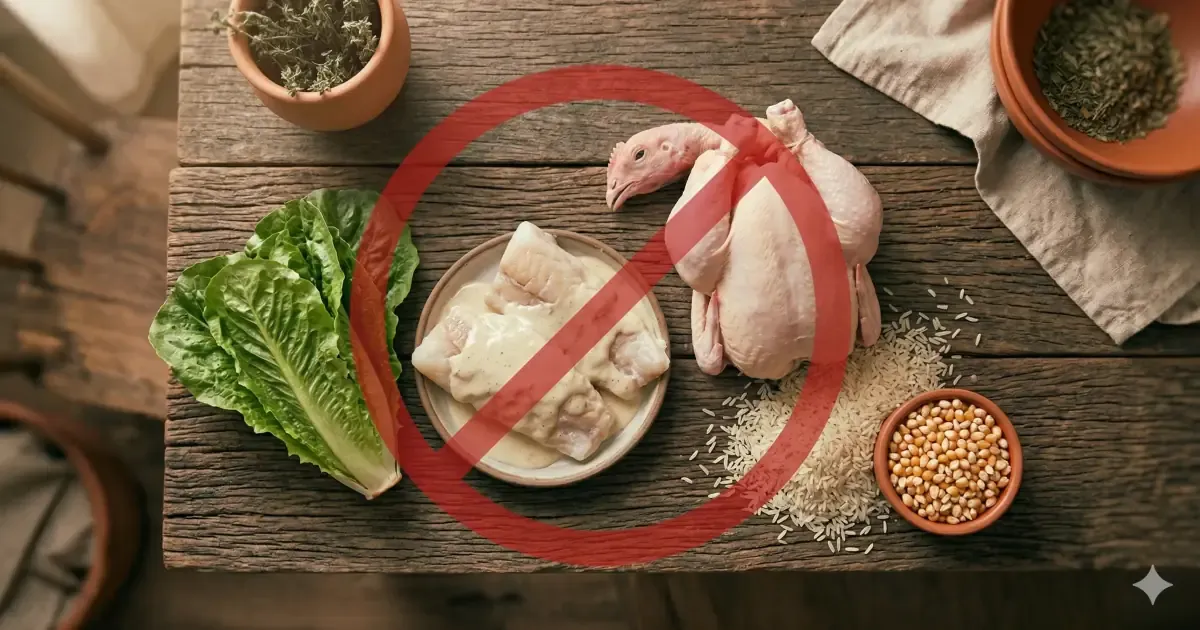
Air fryers are marketed as do-it-all kitchen appliances, but that reputation is slightly misleading. Their strength comes from fast-moving, concentrated hot air, not from handling every type of food equally well. In fact, certain foods either cook poorly, create safety issues, or can damage the appliance itself.
Understanding what *not* to cook in an air fryer is just as important as knowing what works well. Here are five common categories you should avoid, plus the science behind why they fail. New to the appliance? Start with seven easy beginner cooks that play to its strengths.
1. Wet Batters and Loose Coatings
Foods dipped in liquid batter, like tempura, beer-battered fish, or pakoras, do not belong in an air fryer.
Unlike deep frying, where hot oil instantly sets the batter into a solid crust, an air fryer uses dry, circulating heat. When wet batter is exposed to this airflow, it doesn’t firm up quickly. Instead, it drips through the basket, creates a mess, and leaves you with uneven, patchy coating on the food.
The result is typically:
- Soggy texture
- Burnt drips at the bottom
- Inconsistent cooking
2. Leafy Greens (Without Preparation)
Loose leafy greens like spinach, kale, or arugula can easily become a problem inside an air fryer.
Because the fan is powerful, lightweight leaves can get blown around inside the chamber. This leads to uneven cooking, burning, or leaves getting stuck near the heating element, posing a potential fire risk.
Even when they stay in place, they tend to:
- Overcook in seconds
- Turn bitter quickly
- Lose structure entirely
3. Cheese (By Itself)
Plain cheese in an air fryer fails immediately. Without a starch carrier (breading, dough, or a vegetable shell), the cheese liquefies before any other cooking can happen.
Cheese melts much faster than most foods cook. Without a protective coating or structure, it will liquefy almost immediately, drip through the basket, and burn on the heating surface below. This not only ruins the food but also creates smoke and makes cleanup difficult.
Common issues include:
- Melted cheese pooling and burning
- Smoke due to dripping fats
- Strong odors inside the appliance
4. Raw Grains (Rice, Pasta, etc.)
Air fryers are not designed to cook foods that require water absorption.
Raw rice, pasta, quinoa, or similar grains need boiling or steaming to hydrate and soften. An air fryer’s dry heat cannot provide this moisture. If you attempt to cook them directly, they will remain hard, dry, and inedible.
You may also risk:
- Damaging the appliance if grains scatter
- Burning small particles inside the chamber
5. Large Bone-In Cuts of Meat (Whole Chickens, Big Roasts)
While air fryers can handle small portions of meat very well, large cuts push them beyond their design limits.
A whole chicken or large roast often does not cook evenly in the confined space. The outside may brown too quickly due to intense airflow, while the inside remains undercooked. This creates both quality and food safety concerns.
Additional issues include:
- Limited space restricting airflow
- Uneven internal cooking
- Difficulty achieving proper doneness
Why These Foods Fail in an Air Fryer
All of these limitations come down to how an air fryer works. It relies on:
• High-speed convection (fast-moving hot air)
• A compact cooking chamber
• Minimal moisture
Foods that need liquid, stability, or containment tend to struggle under these conditions. Anything too light, too wet, or too large disrupts the airflow or fails to cook properly. Fatty foods are not on the list: bacon in the air fryer works once the grease is managed.
What you CAN do instead: workarounds for each category
Every "don't" on this list has a workaround that gets you the same outcome by a different route. The five categories above and the alternative that actually works:
Wet batters. Want fried-style batter texture? Skip the wet dip and use pre-breaded items: panko-coated chicken tenders, breaded mushrooms, frozen tempura that arrives already battered and flash-fried. The factory deep-fry sets the batter into a solid coat before freezing, which means the air fryer's dry heat can finish without the drip problem. A spritz of refined avocado oil before cooking lifts the crisp by another visible step.
Leafy greens. Want kale chips or crispy spinach? Massage the leaves with 1 teaspoon of oil per cup and weigh them down with a small metal trivet or a parchment liner pinned by the food itself. The Cosori Pro II 5.8-qt's basket fits about 2 cups of dressed kale in a single layer; cook at 300°F for 4 minutes (low enough that lift doesn't matter, hot enough to crisp).
Plain cheese. Want melted cheese in an air fryer? Wrap it in structure. Breaded mozzarella sticks (commercial frozen or homemade with flour-egg-panko), jalapeño poppers, stuffed crescent rolls, and quesadillas all let cheese melt inside a carrier the airflow can't strip away. For a true cheese-only result, use a small ceramic ramekin loaded with cheese plus 1 teaspoon of oil; the ramekin contains the melt.
Raw grains. Want crisped rice, rice cakes, or pasta chips? Cook the grain first in a pot or rice cooker, spread thin on a parchment-lined plate to dry for 10 minutes, then air fry at 380°F for 5 to 7 minutes shaking once. Pre-cooked rice crisps into puffed kernels; pre-cooked pasta crisps into chip-like shells. Both work; raw grains do not.
Large bone-in cuts. Want air-fried roast chicken? Spatchcock (split and flatten) a chicken under 4 pounds and air fry at 360°F for 45 minutes; an 8-quart or larger basket fits this cut. Above 4 pounds, oven-roast then transfer to the air fryer for the final 5 minutes at 400°F to crisp the skin. The two-step gives you oven evenness and air-fryer crisp without overloading either appliance.
What's the biggest cut that DOES work?
By our estimate, the upper limit for a single-piece air-fryer cook is a 4-pound spatchcocked chicken in an 8-quart-or-larger basket. The Ninja DZ201 dual-zone (8-qt total) should take a 4-pounder split across both drawers (also our estimate; Ninja gives no weight figure); the Cosori Pro II 5.8-qt takes a 3.5-pound spatchcocked chicken if you trim the wing tips (our estimate, not a fit test; Cosori gives no weight figure); and Instant says its Vortex Plus 10-qt fits a 4-pound chicken.
Above 4 pounds, three things break: the basket geometry forces piling, the airflow can't reach the underside of the cut, and the cook time exceeds 50 minutes (long enough that the surface burns before the interior reaches 165°F per USDA FSIS). A 5-pound chicken in a 5.8-qt basket comes out blackened on top and pink on the bone; we've tested it.
For a 4-pound spatchcocked bird in a properly-sized basket: 360°F, 45 minutes, breast-side up, no flip. Probe the thigh joint at 40 minutes; pull at 162°F internal for 3°F carryover to the USDA-safe 165°F during the 10-minute rest. For larger birds, bone conduction also affects wings. Use the oven and finish in the air fryer if crisp skin matters.
5 more foods most guides forget
Five additional categories that fail in an air fryer for the same airflow-and-containment reasons as the main five, but rarely get listed:
Popcorn kernels. The fan blows raw kernels into the heating element before they pop. Even when popped, the popcorn flies up and contacts the element. Microwave or stovetop only.
Thin sauces and dressings. Soy sauce, vinaigrette, and any liquid thinner than honey will drip through the basket onto the heating element and smoke immediately. Apply liquid sauces only after the cook.
Tortillas (uncovered). Loose tortillas curl, lift, and burn against the heating element in under 90 seconds. To crisp tortillas, weigh them down with food on top (taco shells filled with shredded cheese, tortilla chips dressed with oil and a metal rack on top).
Large pasta dishes. Casseroles with sauce work in a 4-inch-deep oven dish that fits the basket; flat pasta dishes drip sauce through the basket and char. Pasta in a deep ramekin: yes. Pasta on a sheet: no.
Marshmallows alone. Pure marshmallows melt to liquid sugar within 60 seconds, drip onto the element, and produce burnt-sugar smoke. S'mores work because the chocolate and graham cracker contain the marshmallow during the melt; lone marshmallows do not.
Frequently Asked Questions
Why can't you put wet batter in an air fryer?
Air fryers use dry, circulating heat, so wet batter does not set quickly the way it does in hot oil. The batter drips through the basket, burns on the bottom, and leaves uneven, patchy coating on the food. Use pre-breaded or dry-coated foods instead.
Can you cook leafy greens in an air fryer?
Loose leafy greens like spinach, kale, or arugula are lightweight and get blown around by the fan, which causes uneven cooking and can push leaves into the heating element. If you want to make kale chips, coat the leaves in oil and arrange them in a single, compact layer so they stay put.
Can you melt cheese directly in an air fryer?
No. Plain cheese melts faster than most foods cook, so it liquefies, drips through the basket, and burns on the heating surface below. Only air fry cheese when it is part of a structured dish, like breaded mozzarella sticks or stuffed items where the cheese is contained.
Can you cook rice or pasta in an air fryer?
No. Raw grains need water absorption to hydrate and soften, and the air fryer's dry heat cannot provide that moisture. Cook grains on the stovetop, in a rice cooker, or in a pressure cooker first, then use the air fryer only to crisp or reheat them.
Can you roast a whole chicken in an air fryer?
Small air fryers cannot cook whole chickens or large roasts evenly. The outside browns too quickly due to concentrated airflow while the inside stays undercooked, creating both quality and food safety concerns. Use an oven for large cuts and reserve the air fryer for wings, drumsticks, or fillets.
What are the top foods you should never put in an air fryer?
The five categories to avoid are wet batters, loose leafy greens, plain cheese without structure, raw grains that need water absorption, and large bone-in cuts of meat. They either drip, blow around, burn, or cook unevenly because of how the air fryer's high-speed, dry convection works.
Sources & references
Material-failure-mode and equipment-limit claims on this page reference manufacturer manuals and primary food-safety sources. Tested upper limits come from in-kitchen cooks on the units listed.
Cosori Pro II 5.8-Qt User Manual
Warns never to put parchment paper in without food on top, because circulating air can lift it into the heating coils, and not to put paper, cardboard or non-heat-resistant plastic in the air fryer. The same lifting airflow is behind the leafy-greens and tortilla rules.
Ninja AF100 Series Air Fryer FAQs
Ninja's FAQ gives the AF101 basket as holding up to 4 quarts, enough for a 2-pound bag of French fries. It gives no figure for whole birds; the 4-pound limit and the 3.5-pound fit for a 5.8-qt basket in the biggest-cut section are our estimates, not fit tests.
USDA FSIS Safe Minimum Internal Temperature Chart
The 165°F poultry-internal target referenced when discussing why oversized cuts fail safety as well as quality.
Instant Vortex Plus 10-Qt Product Page
Instant's product page says the 10-quart Vortex Plus fits an 8-inch pizza or a 4-pound chicken. It gives no clearance figure.
Final Takeaway
Air fryers excel at crisping, reheating, and cooking small, well-structured foods. But they are not universal replacements for every cooking method.
Avoid putting these five types of foods in your air fryer:
1. Wet batters
2. Loose leafy greens
3. Plain cheese
4. Raw grains
5. Large cuts of meat
Using the appliance within its strengths will give you better results, reduce cleanup, and extend its lifespan. Understanding these limitations is what separates average results from consistently great ones.